I’ve been on an audiobook kick lately. Usually, I’d listen to some longform YouTube video via background playback but have made an effort to shift that focus to audiobooks. Some were spectacular, like Rainn Wilson’s The Bassoon King, or Marc Maron’s Attempting Normal. Some were not… Like The 48 Laws of Power, which to me felt more like “How to get ahead in life using manipulation and lies.” Right now, I’m listening to A Marriage at Sea by Sophie Elmhirst. It’s a tale of Maurice and Maralyn Bailey, a couple who took up sailing decades ago. They went on a voyage by themselves from England to New Zealand. Tragedy strikes when their boat is struck by a whale and they end up adrift in the Pacific for 118 days. It’s non-fiction, and spoilers: they made it back! But it’s a tale of survival in spite of unbelievable odds.
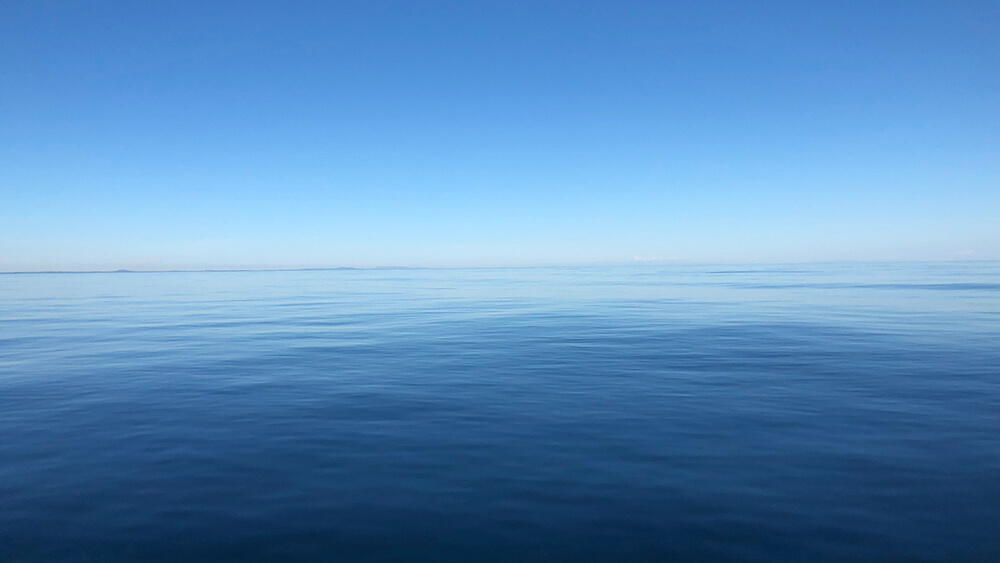
This ticked a few boxes for me. Like Maralyn in the book, I can’t swim. Floating itself is tough, let alone traversing water. I’ve also had this sense of awe, respect and fear of the ocean and its vastness. Staring out into the ocean, seeing it stretch on into forever makes me contemplate things. I think about how enormous it is, and I think about how small I am in the scope of things. It leaves me feeling humble. Anything large will do that. The ocean, Waimea Canyon in Kauai, Hawaii. People are so small in the scheme of things. We’re like motes of dust in the universe. It helps to put things in perspective.
I’ve also always enjoyed survival stories. One of my favorites is Jon Krakauer’s Into Thin Air, which goes over the tragedy on Mount Everest on May 10, 1996 when climbers were caught in a blizzard and eight perished on the mountain. It went into detail on the climb itself, the gear, conditioning and expertise required. There were stories of some who survived the blizzard at great cost and the over-commercialization of this endeavor. Over time it turned into an tourism industry that made the inhuman feat of summiting Everest accessible to anyone with the money, while forgoing the expertise of mountain climbing with disastrous results.
There is a fascination with survival stories that people share. I was in Hawaii for a vacation recently. On my cab ride to my hotel in Honolulu, my driver and I ended up chatting about travel. She revealed that she was afraid to fly, and that she watched Mayday: Air Disaster. Let me tell you, it was as if I found a kindred spirit right in that car – I enjoy that show as well! We then went on about why I believe flying is absolutely the safest way to travel. Other shows came up like “I Shouldn’t Be Alive” as well. When she dropped me off at my hotel she told me she wanted to go home and binge a couple episodes. Clearly this is something she really enjoyed, and it seemed she couldn’t readily share that with others. I was the guy though in that moment. We connected in that way, and then I was gone forever. There’s something cool about the transient nature of that interaction. Probably the greatest Uber ride I ever had.
So the question is: Why is this genre appealing? It’d scare off people who prefer a lighter fare. Is it morbid curiosity? I think its something a bit deeper than that. For me, I enjoy survival stories because it shows how people can persevere in the face of an impossible situation. Its a metaphor for life: for whatever reason, or no reason at all a lot of times, unfavorable things will happen,. But with ingenuity, tenacity and a little bit of luck – you can eke out a win. I would argue that this is hard-wired into our collective psyche as a species.
Humanity has survived wars, famines, plagues, natural disasters and inhospitable conditions since our time here. For better (or for worse, you can argue) we’ve tamed the Earth to bolster our survival. Our very existence is the hallmark of the virtues of ingenuity, tenacity and luck that our ancestors practiced millennia ago, back when we were huddled in caves and not complaining that the takeout we ordered on our cell is a few minutes late. They made the best decisions they could in a harsh, uncaring world. They survived, adapted and the chain continued on. Maybe seeing someone make the right decisions at a crucial point, or trudging on in spite of setbacks tugs at our heartstrings because it calls back to that ancient struggle.
This probably goes hand-in-hand with comeback stories. Everyone loves a comeback story. The Knicks winning the NBA Finals felt so good, even to someone like me who isn’t into sports! Game 4 of the Finals had the Knicks coming back from 29 points down to get the win. Watching it happen was something else. My wife and I tuned in for the last quarter after a night out and figured there’s no way the Knicks could do it. Slowly but surely they made their way. They fought from underneath and came back to cement the largest comeback in NBA Finals history. We literally saw history made in that series that night and it was amazing. Even in gaming, the sweetest wins are the ones that come back from the brink. Losing seems inevitable, but somehow… The miracle happens, and it feels so good when you snatch victory from the jaws of defeat. This is why I always say regarding competition, never, EVER give up. You never know.
It might all be one in the same. To me, its all tied to the core concept of survival. It’s a thread of humanity that we all share subconsciously. Besides, real life has always been stranger than fiction any day of the week.